Forget the croissant. Forget the cereal. In Morocco, breakfast is a full-fledged meal, a moment of pleasure and sharing that sets the tone for the day. On the table, no half measures: it's generous, it's fragrant, it's homemade.
Msemen: the essential
Msemen is a layered crepe, crispy on the outside and soft on the inside, enjoyed plain, with honey or melted butter. It is the quintessential morning ritual in Morocco. Every mother, every grandmother has her technique for stretching the dough into a thin, translucent layer, folding it, flattening it, folding it again.
The sound of msemen sizzling on the griddle is part of the soundtrack of Moroccan childhood. It's a comforting sound, a promise of sweetness.
Baghrir: the thousand-hole pancake
Baghrir is the other star of Moroccan breakfast. This spongy pancake, riddled with tiny holes on its surface, is cooked on one side only. The holes absorb honey and melted butter like tiny sponges, creating an irresistible bite between soft and melting.
The secret of baghrir lies in the batter: a blend of fine semolina and flour, liquid enough for air bubbles to create those famous holes. It's a delicate art learned only through practice.
Bread and olive oil
On every Moroccan breakfast table, you'll find bread. Not a baguette, but khobz — a round, dense bread baked in a traditional oven. You dip it in olive oil, spread it with fresh cheese, pair it with black olives.
Olive oil holds a central place in Moroccan breakfast. Often locally pressed, it's poured into a small dish at the centre of the table. You dip your bread in it, sometimes adding a touch of honey. It's simple, it's pure, it's the very taste of Moroccan terroir.
Amlou: the treasure of the south
Amlou is a speciality that alone is worth the journey. It's a traditional spread made from roasted almonds, culinary argan oil and honey. The result is a smooth cream with nutty and honey notes that pairs perfectly with msemen or bread.
Originally from southern Morocco, amlou is a small nutritional treasure that families prepare by hand. Every spoonful is a concentrate of flavour and craftsmanship.
The sharing culture
Moroccan breakfast is not eaten solo, standing up, in five minutes. It is shared. Everything is placed at the centre of the table — the crepes, the bread, the honey, the olive oil, the cheese, the olives — and everyone helps themselves.
It's a moment of togetherness that gathers the family before the day begins. People talk, laugh, take their time. Mint tea or coffee is passed around, refills are poured, and everyone stays at the table a little longer than necessary.
Morning tea
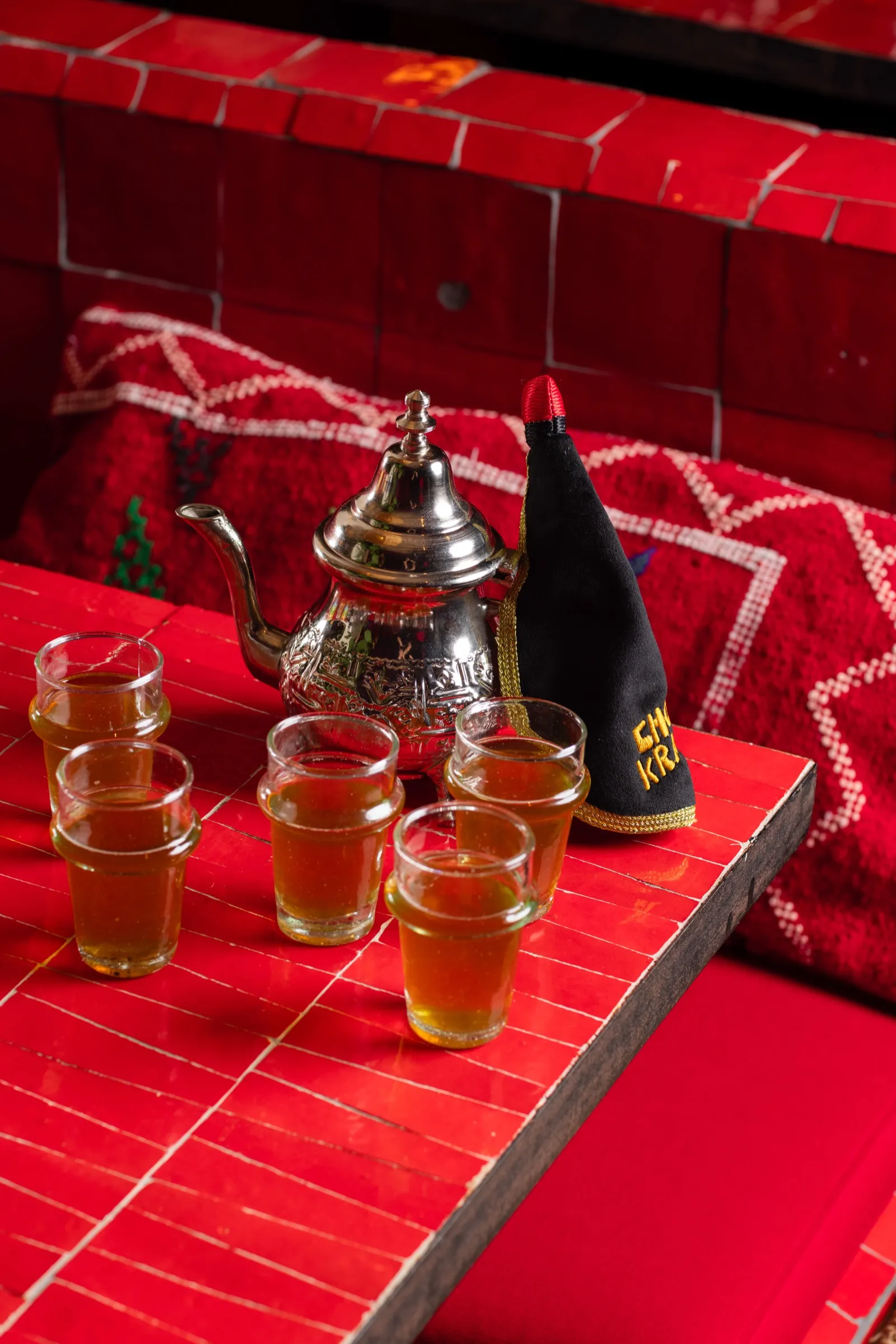
Mint tea almost always accompanies Moroccan breakfast. Strong, sweet, fragrant, it wakes the mind and warms the body. In large cities, coffee — nous-nous, that frothy café au lait — is gaining ground, but tea remains king in traditional households.
A modern evolution
Moroccan breakfast is evolving, like everything else. In cities, fresh fruit juices, avocados and toast are making an appearance. But in family homes, in the countryside, in the memories of those living far from Morocco, msemen and baghrir remain the guardians of a living tradition.
For Moroccans in the diaspora, traditional breakfast is often the first gesture of nostalgia. Making msemen in Paris, Montreal or Brussels is to recapture for a moment the smell of home, the taste of childhood, the warmth of a Moroccan morning.
FAQ
- What do Moroccans eat for breakfast?
- Moroccans typically eat msemen, baghrir, traditional bread, honey, olive oil, fresh cheese, amlou and mint tea.
- What is msemen?
- Msemen is a Moroccan layered crepe, crispy on the outside and soft on the inside, very popular at breakfast.
- What is amlou?
- Amlou is a Moroccan speciality made from roasted almonds, culinary argan oil and honey.
- Do Moroccans drink coffee in the morning?
- Yes, coffee is very popular, especially in large cities, but mint tea remains an iconic drink.
- What is the most traditional breakfast in Morocco?
- An assortment of msemen, baghrir, bread, olive oil, honey and mint tea represents one of the most traditional versions of Moroccan breakfast.