If Moroccan cuisine had to be summed up in two dishes, it would undoubtedly be couscous and tajine. Two monuments. Two absolute classics. Two dishes that everyone knows by name but few truly know how to distinguish beyond appearance.
Yet couscous and tajine are two brothers who look nothing alike. They share the same DNA — that of Moroccan family cooking — but each tells a different story.
Couscous: the dish of family and Friday
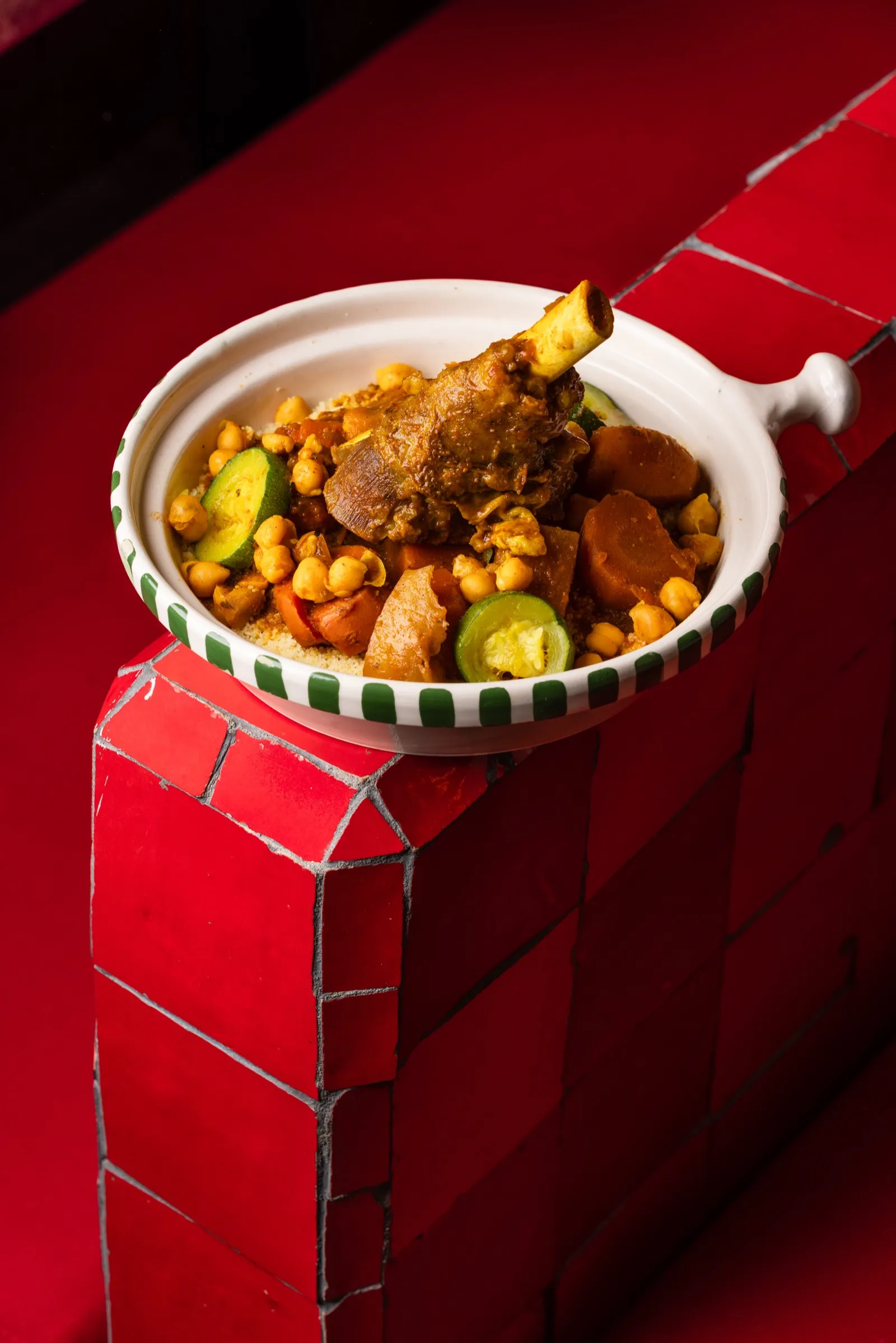
Couscous is a constructed dish. It rests on a precise architecture: semolina as the base, vegetables on top, meat at the summit, and fragrant broth binding everything together. Each element is prepared separately before being assembled at the time of serving.
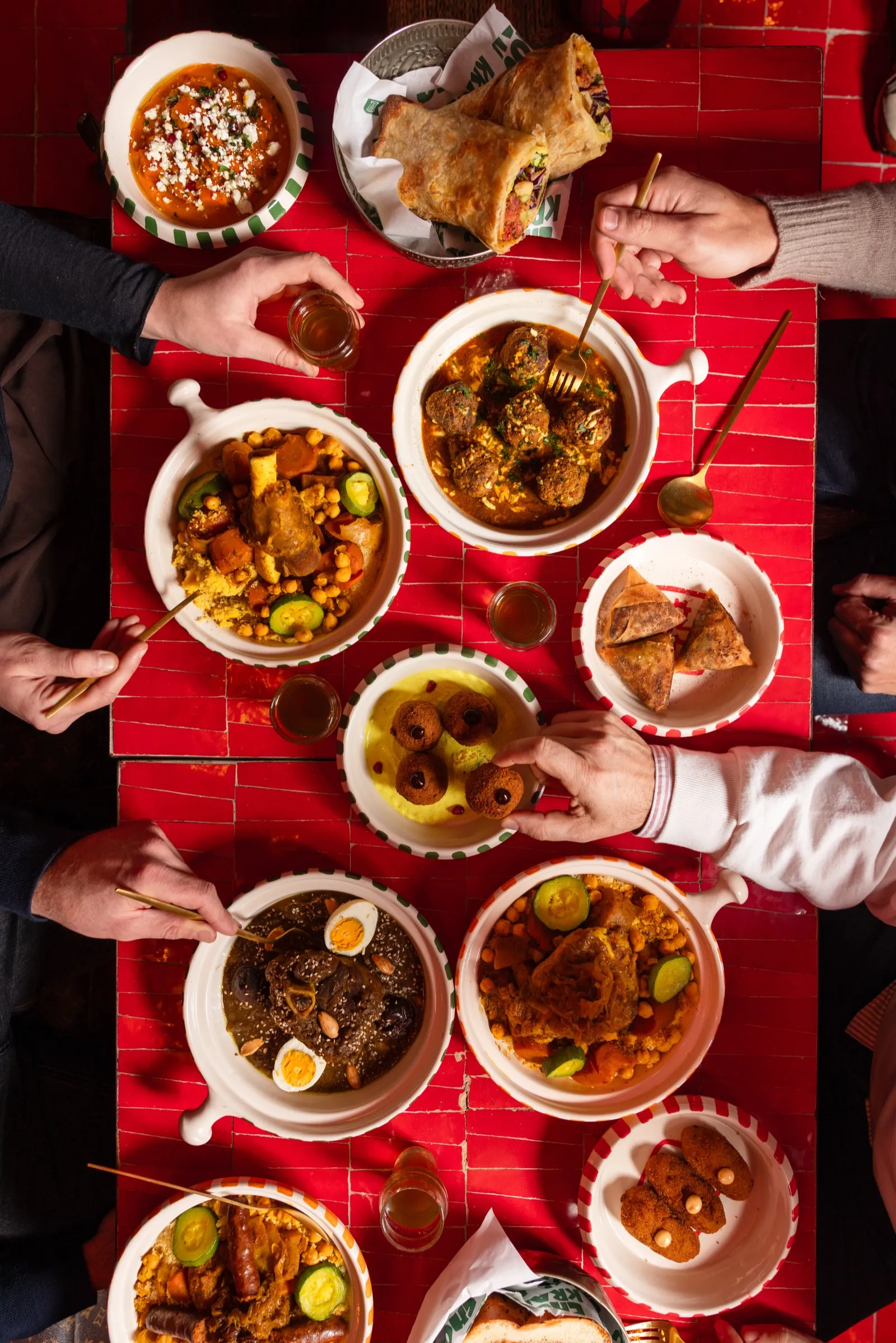
It is the Friday dish in Morocco, the ultimate family meal. People gather around a large platter, eat together, share. Couscous is a collective act. It is not eaten alone, it is not eaten quickly. It is a moment.
The semolina — rolled by hand in traditional families — is the heart of the dish. It must be airy, light, each grain separated from the next. It is a work of patience requiring several rounds of steaming and expert hands.
Tajine: the dish of everyday life and intimacy
Tajine is a slow-cooked dish. Unlike couscous, everything cooks together, slowly, in a single vessel: the earthenware pot topped with its conical lid that gives the recipe its name. Heat circulates, flavours mingle, ingredients merge in a slow, fragrant alchemy.
It is the everyday dish, the one prepared during the week, the one that simmers while life goes on. A tajine requires no ceremony. It requires time. You place it on the heat and let it do its work.
Where couscous is an assembly, tajine is a fusion. Vegetables melt into the sauce, meat becomes tender, spices infuse. Every bite contains a little of everything.
Different constructions
The main difference between couscous and tajine lies in their construction. Couscous is vertical — elements are stacked. Tajine is horizontal — everything rests in the same dish, on the same level.
Couscous separates to better unite: each ingredient keeps its identity while contributing to the whole. Tajine fuses to better reveal: each ingredient gives its flavour to the others in a constant exchange.
A different relationship with time
Couscous is a feast-day dish. Its preparation is long, its presentation important, its service an event. Tajine is a dish of quiet patience. You prepare it and forget it. It takes its time, alone, under its lid.
This relationship with time says a lot about Moroccan cuisine. It knows how to be spectacular when needed — Friday couscous, piled high on a grand platter — and it knows how to be humble and discreet in daily life — tajine simmering gently in a corner of the kitchen.
Dozens of variations
Like all great classics, couscous and tajine come in endless variations. Seven-vegetable couscous, tfaya couscous with caramelised onions and raisins, fish couscous on the coasts. Chicken tajine with preserved lemon, tajine with prunes and almonds, kefta tajine with eggs.
Every region of Morocco adds its touch. Every family adds its secret. It is this infinite diversity that makes Moroccan cuisine so rich.
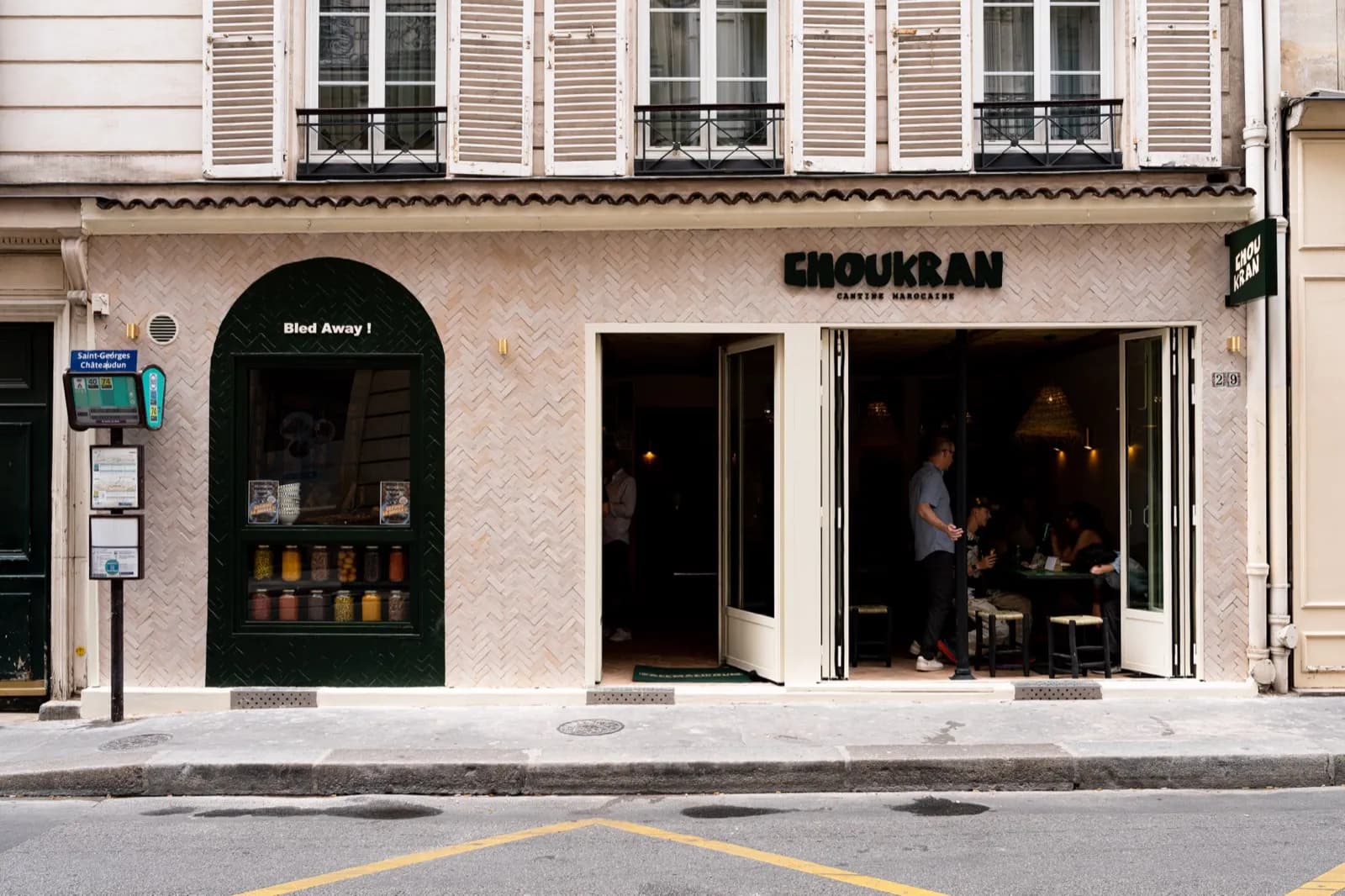
At Choukran, we offer both. Because choosing between couscous and tajine would be like choosing between the sun and the moon. Both are essential. Both are magnificent. And both tell the story of Morocco.
FAQ
- What is the main difference between couscous and tajine?
- Couscous is built around semolina accompanied by broth, vegetables and meat, while tajine is a slow-cooked dish where all the ingredients cook together slowly in an earthenware pot.
- What is the most popular dish in Morocco?
- Both are extremely popular. Couscous is often associated with Friday family meals while tajine is more of an everyday dish.
- Why is the tajine called that?
- The word refers to both the recipe and the earthenware pot in which it is cooked.
- Are there several types of couscous?
- Yes. Seven-vegetable couscous, tfaya couscous with caramelised onions and raisins, chicken couscous and lamb couscous are among the many Moroccan variations.
- Should you try both when visiting Morocco?
- Absolutely. Couscous and tajine tell two complementary sides of Moroccan gastronomy and offer a full understanding of this cuisine's richness.