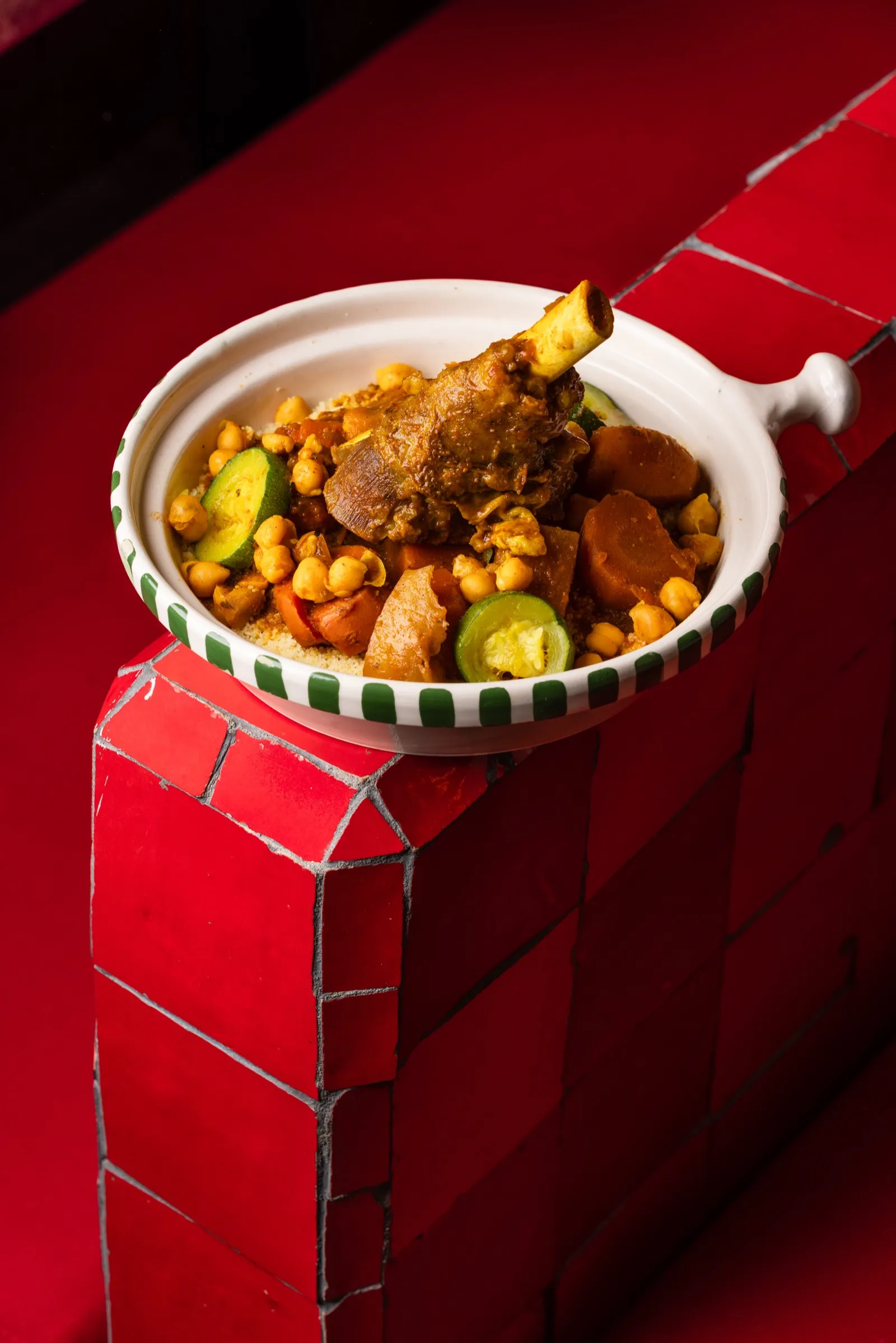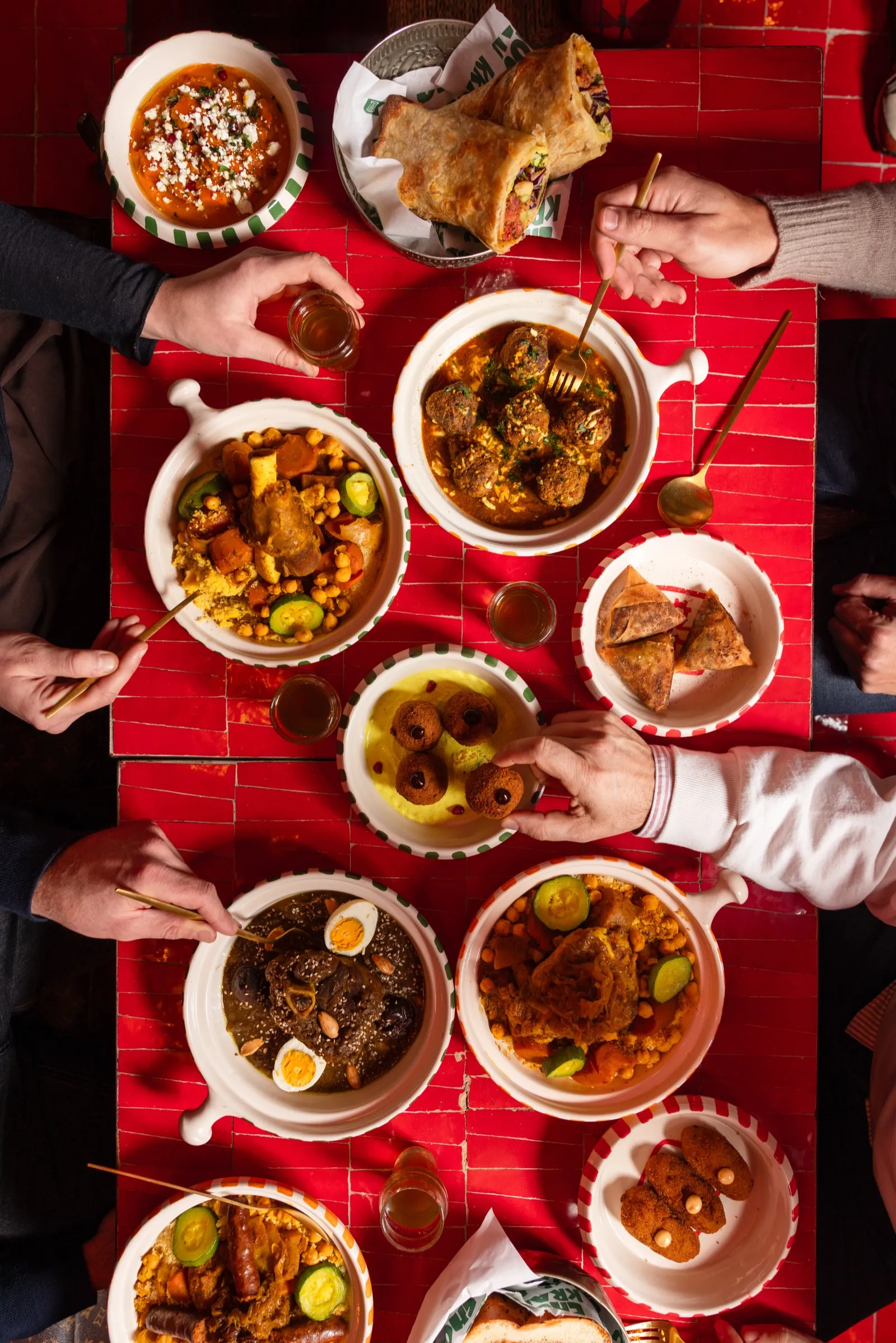
It's not a myth, it's a fact: for years, couscous has been one of France's favourite dishes. Survey after survey, it rises to the top of the ranking, ahead of duck breast, moules-frites and sometimes even steak-frites. But how did a dish from the Maghreb become so deeply rooted in French food culture?
A dish of conviviality
Couscous is a dish you don't eat alone. It's made to be shared, placed in the middle of the table in a large, generous dish. You serve yourself, you have seconds, you offer some to your neighbour. In this way, couscous perfectly matches the French dining culture: a moment of sharing, discussion and connection.
The French meal is above all a social occasion. And couscous fits naturally into that. It creates that family atmosphere, that warmth associated with truly great meals.
Generosity incarnate
When a dish of couscous arrives at the table, it impresses. Portions are generous, vegetables abundant, meat tender, broth fragrant. It's a dish that says: "There's enough for everyone." In an age where everything is counted and measured, this generosity touches something deep.
Couscous doesn't cheat. It doesn't play at gastronomic minimalism. It is honest, direct, generous. And the French love that.
Natural nutritional balance
Without trying, couscous is a remarkably balanced dish. Complex carbohydrates from the semolina, fibre and vitamins from vegetables, protein from meat or legumes, healthy fats from olive oil. It's a complete dish that nourishes without weighing you down, that satisfies without excess.
In an era where people seek to eat better, couscous naturally offers what many diets try to reproduce: balance.
The Franco-Maghrebi human story
Couscous didn't arrive in France by accident. It arrived with men and women. With families who crossed the Mediterranean, bringing in their luggage much more than clothes: recipes, gestures, traditions. Couscous in France is the story of North African immigration, of pieds-noirs, of workers who came to rebuild a country.
That's why couscous is more than a dish in France. It is a bridge. A link between two shores, two cultures, two histories that have intertwined over decades.
A dish for all ages
From children to grandparents, couscous brings everyone together. It's neither too spicy nor too bland. It comes in versions for every taste: with chicken for the classic eaters, with vegetables for vegetarians, with lamb for the indulgent. Everyone finds their happiness in it.
Perhaps that's its greatest secret: couscous doesn't divide. It unites.
Accessible, warming spices
Unlike other world cuisines whose spices can surprise the French palate, couscous flavours are warm and familiar. Cumin, sweet paprika, cinnamon, ginger: these are spices that warm without burning, that perfume without overwhelming. They seduce effortlessly, even those unaccustomed to spicy food.
A bridge between cultures
By adopting couscous, France adopted a piece of the Maghreb. And by cooking it, Maghrebi families in France transmitted a heritage to an entire country. Couscous became French without ceasing to be Moroccan, Algerian or Tunisian. It is proof that food is the most beautiful common language.
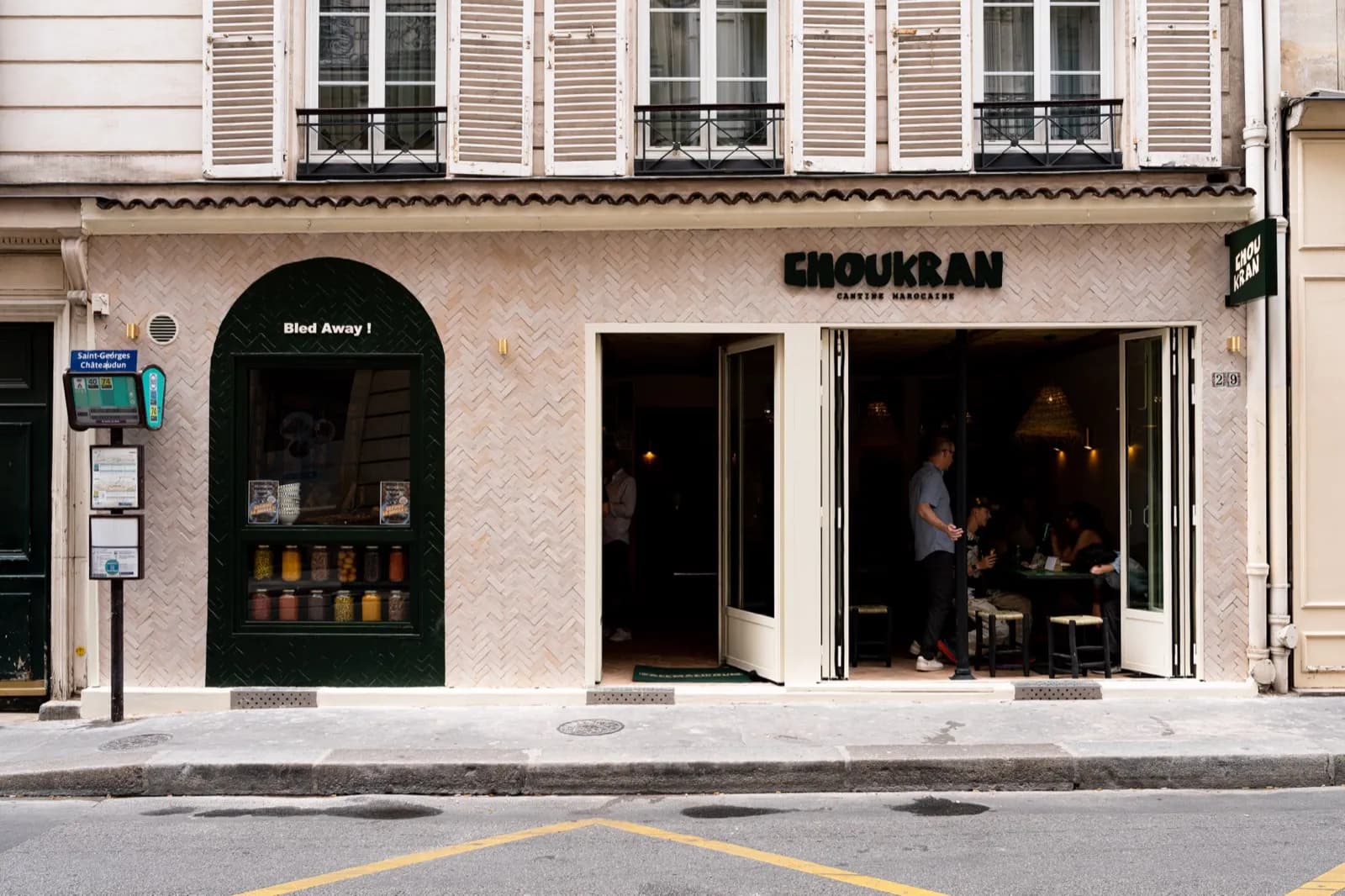
At Choukran, we are proud to carry on this tradition. To serve a couscous that tells this story. That says with every bite: we are from here and from there, and it is this richness that defines us.
FAQ
- Is couscous really the favourite dish of the French?
- For many years, couscous has regularly appeared among the French people's favourite dishes in national surveys.
- Why is couscous so popular?
- Because it is convivial, generous, balanced and deeply associated with shared meals.
- Is couscous Moroccan?
- Couscous is an iconic Maghreb speciality, found notably in Morocco, Algeria and Tunisia, with variations unique to each country.
- Why is couscous so popular in France?
- Thanks to the historical, cultural and human ties between France and the Maghreb countries, but also because it perfectly matches the French culture of convivial dining.
- What is the most traditional couscous in Morocco?
- Friday couscous, prepared with light semolina, seasonal vegetables and slow-cooked meat, remains the most iconic version in many Moroccan families.